XIII. KERÜLETI ÖNKORMÁNYZATXIII. KERÜLETI ÖNKORMÁNYZAT
Kerületi Kártya
Angyalzöld - Zöldfelületi Stratégia 13
Hírnök - A 13. kerület helyi lapja
Ügyfélelégedettségi felmérés
TV13 - Kerületi TV adó
2010. július 31. Oszkár, Bató

The History of the District NyomtatásNyomtatási nézet Továbbküldés ismerősnekTovábbküldés ismerősnek

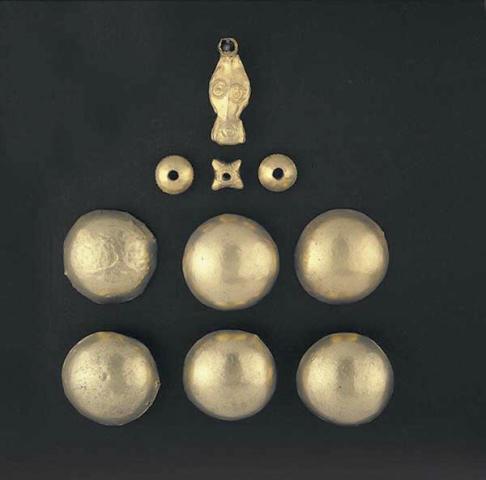
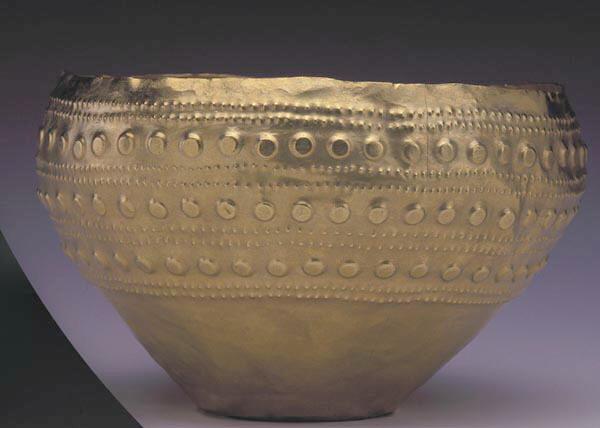
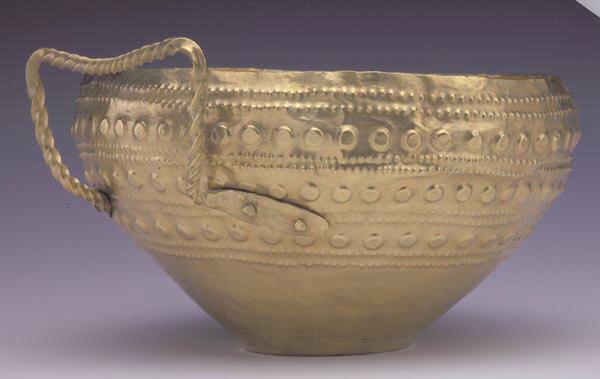
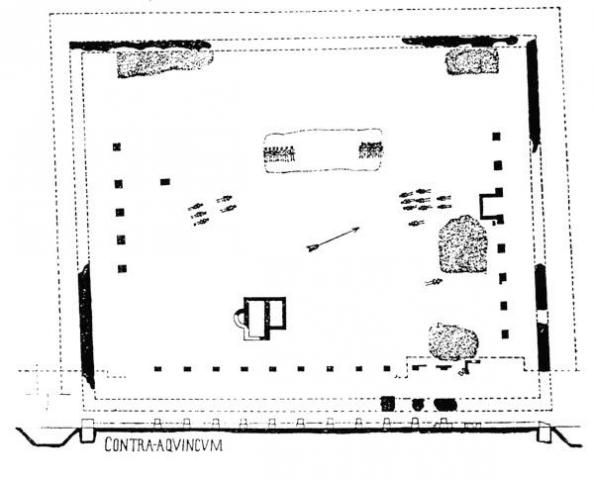
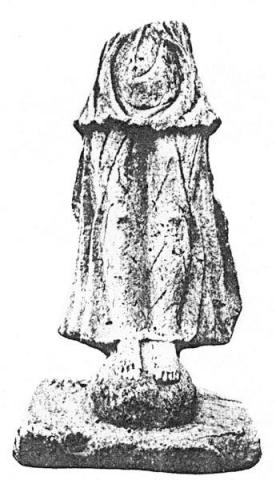
Bronze buttons covered by gold sheet from the early Iron Age (8th century B.C.)Probably Celts, Dacians, Quads and Jasigs wondered there, then in the 8th century the Romans conquered Pannonia and the Danube became the natural boundary of the Roman Empire. The strategic fortress called Transaquincum once stood on the left bank of the Danube.
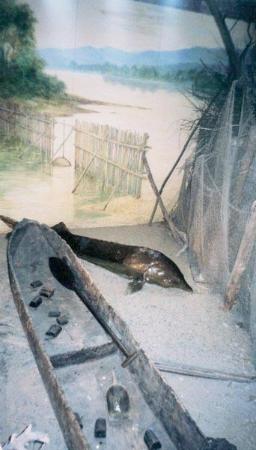
According to the Gesta Hungarorum written by Anonymus, Árpád and the conquering leaders searching for homeland set up camps with their people in Rákos field, from there they went to the Megyer crossing and crossed the Danube. In 1241, on hearing about the arrival of the Tartars, Béla IV called the forces of the country to Rákos field, became the leader of the troops and wended his way East. The defeated Hungarian forces were chased by the Tartars of Khan Batu and the leader Subotey (Szübötej).

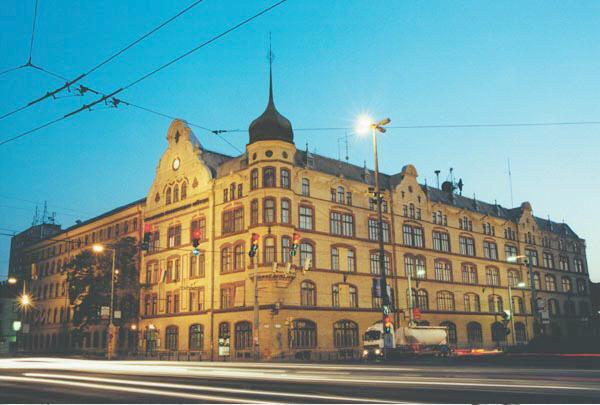
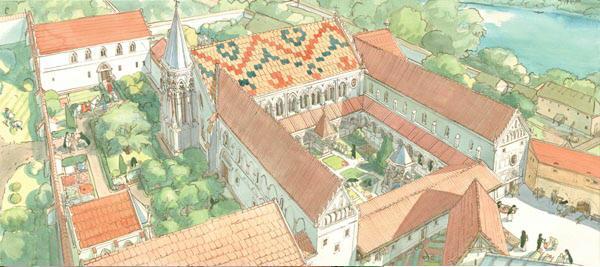
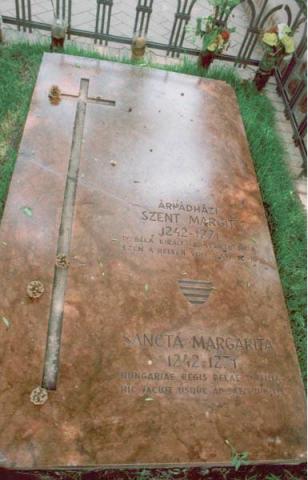
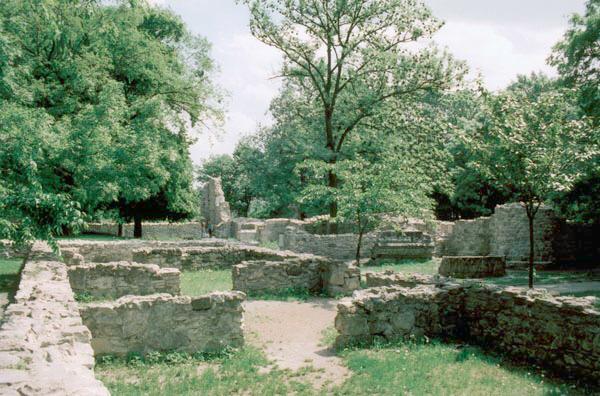
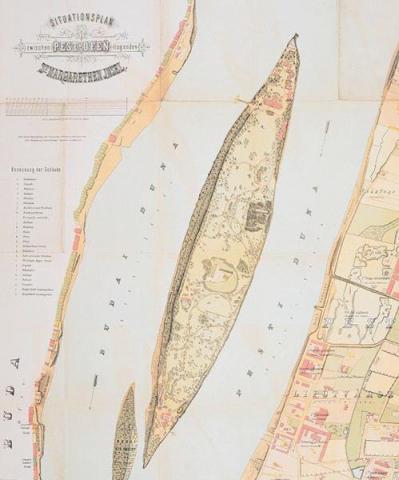
The story of nunneries, monasteries and churches of the Margaret Island is one of the most colourful pages of our district’s history. The former Island of Hares was given its present name Margaret, who was the daughter of King Béla IV. Margaret died in 1271, a year after his father’s decease. She was canonised in 1943.The reconstruction drawing of the Dominician nunnery
In the Middle Ages one could find only a few small villages there. These villages formed the part of the ring of settlements around Pest. Some of them like Új-Jenő and Szentlászló totally depopulated, others like Jenő and Vizafogó merged into the expanding city and became its outskirts.

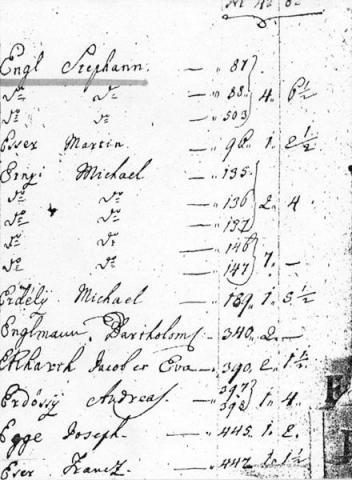
The name of Stefan Engl among the parent proprietors in a census from around 1770

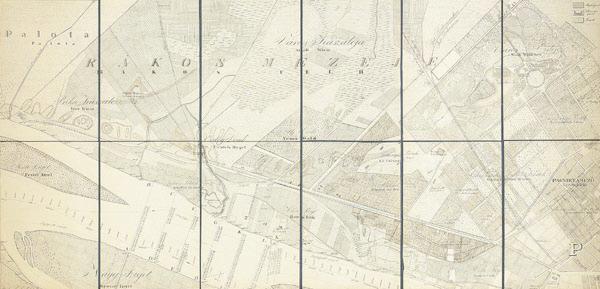
Down-stream Rákosmező was a wide, sparsely populated plain, but primarily it was the place of national assemblies’ sessions or campgrounds for Hungarian forces. During the period from 1277 till the Mohács Disaster several sessions of assemblies were held there. Assemblies were convened by the king generally between April and November when cold weather set in. It is hard to determine the very place of the sessions since in the Middle Ages the field called Rákos covered a really extensive territory. According to the map of Mikoviny issued in 1737, the so-called Campi Rakos coincided with the present territory of Angyalföld. Campi Rakos was a grassland situated south of the old mouth of Rákos Stream, west of the Danube and north of the current city limits. The first assembly held its session in King (Kun) László IV’s time and declared the then just 15-year-old King major. Róbert Károly was also recognised as king by the Rákos assembly in Autumn 1307. At last Mátyás Hunyadi was proclaimed king in the Rákos field, when the 15 thousand (some sources mention 40 thousand) armed soldiers of Mihály Szilágyi had had the desired effect on the nobles carrying on consultations in Buda. In April 1526, on hearing the oncoming Turkish invasion, the king convened the last feudal assembly.

During the period of the 160-year-long Turkish rule, our settlements and villages of the Middle Ages still existed, but on hearing the arrival of King Lipót I, the Turks burnt up and destroyed these villages, too.

When Pest was freed from the Turkish invasion, the city received letters-patient from King Lipót I in 1703. This document mentioned Szentlászló-puszta as north suburban town of Pest. But until then, the stones of the buildings and churches of the former town had almost been completely carried off.

Regarding explanations of name Angyalföld, the one related to the vineyard owner family Engl from South Tirol may be the most provable. Name Engl can be found in the register of population of the outskirts of Terézváros, drawn up during the census of the 1770s. In this register Stefan Engel was registered as old vineyard owner. Since his lands were may be called Engelsfeld, the name Angyalföld can be its direct translation.

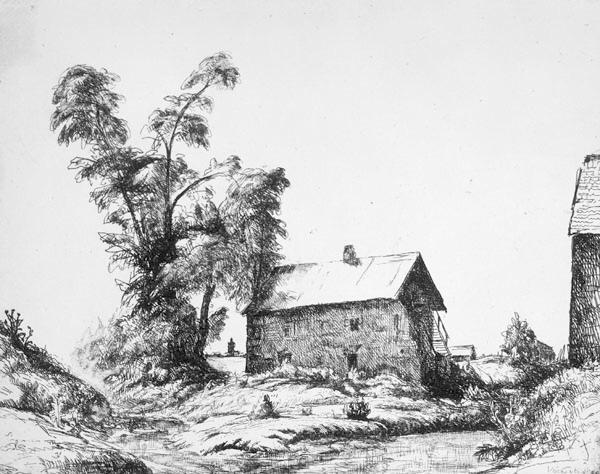
Ördögmalom (Devil’s mill) is our 17-18th century relic, that could only survive till the 1960s owing to several rebuilding and reconstructions of the old Császármalom (Emperor’s mill), although in legal proceedings of the 19th century it was no longer indicated as a mill.

The mill on the drawing of Tikáts K. made in 1925

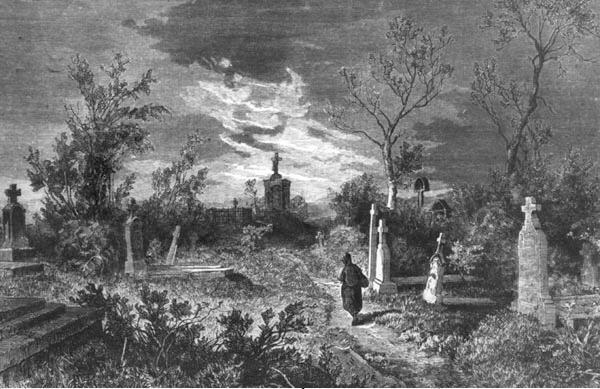
Building in, development and resettlement of Angyalföld and Újlipótváros as integral parts of our capital began from the mid 1800s. All non-desirable buildings and establishments like cemeteries, asylums, and dangerous powder mills were continuously moved from the rapidly extending Pest to these suburban areas.

The Board of Public Works was formed in 1870. In his long term projects, the Board had already include town planning and development of our district, determined the basic lines of main roads, outlined residential districts. Tasks of the Board also included building of bridges across the Danube, docks, formation of Danube banks and embankments with regards to flood-prevention.

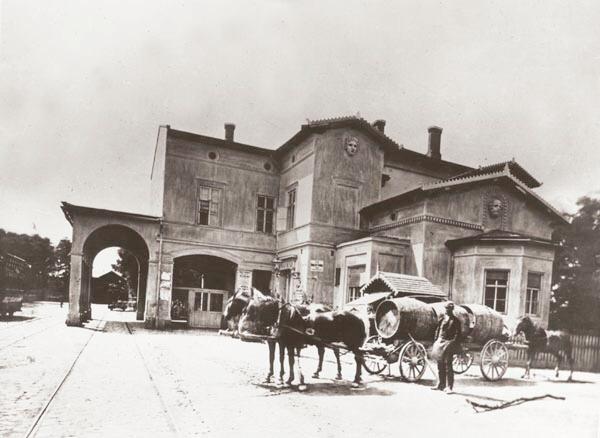
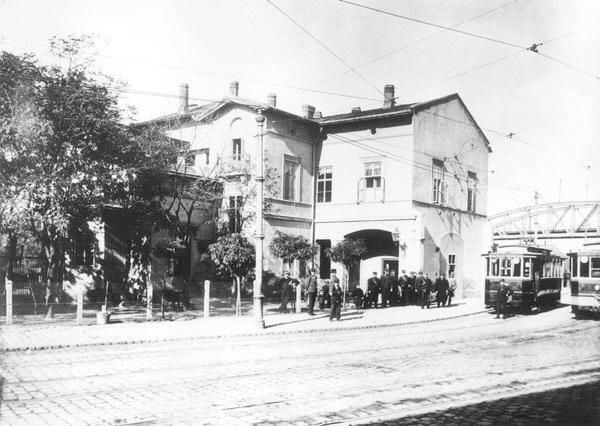
Owing to the Danube, the highroads leading to Vác, the first railway to Vác opened in 1846 and the horse-tramway along Váci út (Váci Road) from 1866, our district became more and more integrated into the circulation of the capital on the one hand, and assured the settlement of factories demanding good transport facilities on the other.

Till the end of the 1800s, the significant industrial activities were mainly milling, building and construction and distilling. 6 of the 13 mills of Pest operated in Újlipótváros and Vizafogó in 1895. In addition to the meat, our next most demanded export product in Europe was high quality wheat containing high proportion of gluten.

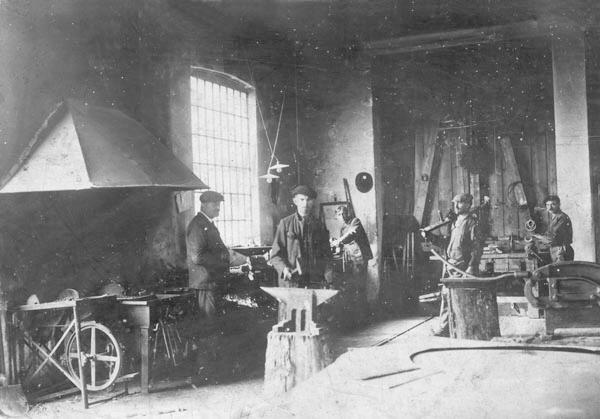
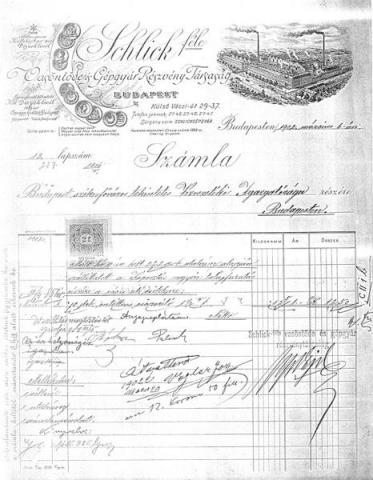
From the end of the 1800s iron industry and metallurgy began to spread and develop and Angyalföld became one of the major industrial parts of Budapest. Factories famous all over the world like Ganz Hajógyár (shipyard) established in 1868, Láng Gépgyár (machine works and engineering), Schlik Nicholson Factory, Eisele Kazán- és Gépgyár (boiler, machine works and engineering), Csavargyár (screw mill) established in 1866 and Elzett Zár- és Lakatgyár (locks factory) established in 1919, settled their factories and workshops in our district.

In the first half of the 1900s representatives of new industrial branches opened their factories there: Gyapjúmosó Rt. (wool-wash factory), Rico Kötszerművek (bandage factory), Jutagyár (jute manufacture), Zsinórgyár (string factory) and Paszománygyár (trimming factory).

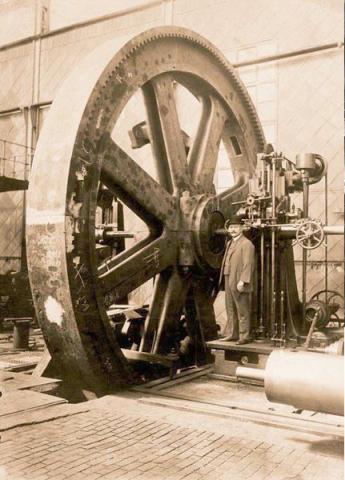
Láng László in 1916In the 1930s the large car producing companies also discovered the advantages of our area. They also established their agencies, workshops and built their service stations in this district. From architectural point of view, the most outstanding building was the building of Fiat Service built in 1936–37. Later Ford Motors moved there and managed the Váci Road workshop.

The growing number of factories attracted lots of people of different nationalities and origins to this quarter of the capital. The majority of incomers came from the settlements around Budapest and from territories of Slovakia inhabited by Hungarians, although the number of Transdanubian, Transsylvanian, Austrian, Slovakian, Czeck and Polish incomers was also considerable. In the beginning, workmen of the factory workers were mainly foreign skilled workers; vegetable gardens around the city also belonged mainly to Slovak and German workers. Assimilation of incomers became quicker at the end of the 1800s, and at the same time, the number of new Hungarian incomers increased.

Multilingual circumstances created the special subculture of Angyalföld, mainly expressed in fashion called jassz (reminded cloths of a shipwright from Hamburg) and slang jassz-language (a mixture of German, Slovak and Hungarian languages).

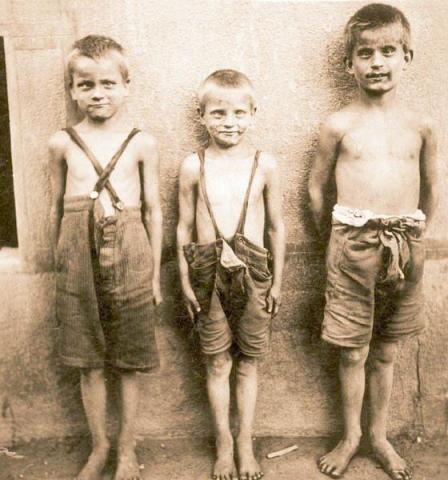
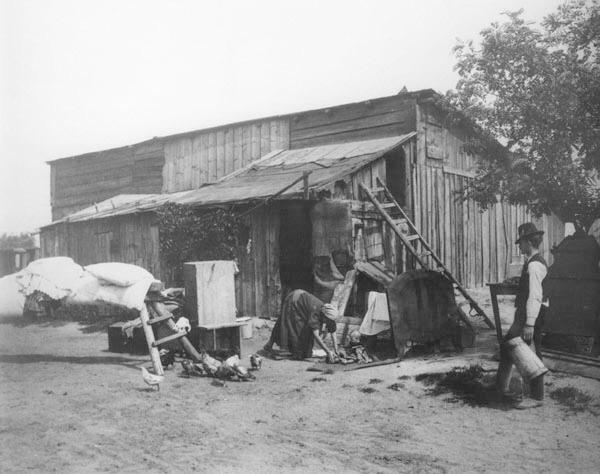
On the basis of statistics, in the end of the 1910s Angyalföld was the most densely populated quarter of the capital. The population of slums lived in overcrowded single-story barracks or in storied tenement buildings under unhealthy and unsanitary conditions. In general, five people lived in a room. The majority of the flats was single room or had a room and a kitchen in better cases. Water-supply and electricity were unknown phenomena. As the rental fees were too high, a lot of people had no other choice but to accommodate night-lodgers to their tight flats.

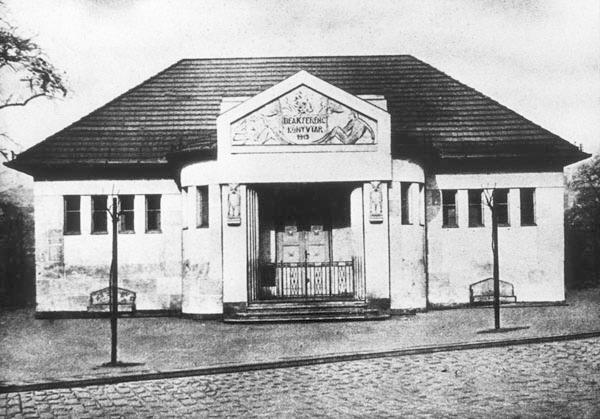
In 1906 István Bárczy was the District Mayor then later the Mayor of Budapest. During his term of office, local government of Budapest laid the foundations of modern public administration. In the result of this modernisation, the government of the capital achieved some substantial improvement in the inhabitants’ living standards. The capital acquired the ownership of profitable service providing corporations and turned their income and profits on social tasks. In the result of these measures first larger schools and then modern housing blocks could be built in our district. The most important results of that time were: the first public library in Budapest in Vág Street, Népszálló (Public Hostel), designed on English patterns and served the homeless and the unique workshop tenement house built for handcrafts men.

The most important page in our district’s history was the day when our district was declared self-governing administrative unit. Regarding rapid growth of population and buildings in 1930, the government of Budapest codified that the capital should consist of 14 districts instead of the past 10. The new District 13 was formed of the suburbia’s of the former districts 5 and 6 (Terézváros and Lipótváros). June 1, 1938 we consider as the birthday of our District, since its formation was declared on that day. On June 15 the self-governing municipal office of Magdolnaváros began to work and the building of the Municipal Office standing on Béke Square was opened. The name Magdolnaváros symbolises the deep respect of our district to the wife of the former Hungarian governor Miklós Horthy, for she did a lot in order to support the poor.

The Great Economic Depression after World War I caused great troubles to the already poor population. That could be the reason why different socialist, communist and labour union movements (had ever fallen) felt on good ground and were so populous. The government of the country and the local government considered Angyalföld as some kind of reference place since the implementation of huge social projects (like building of flats, establishment of schools, medical and cultural institutions) continued.

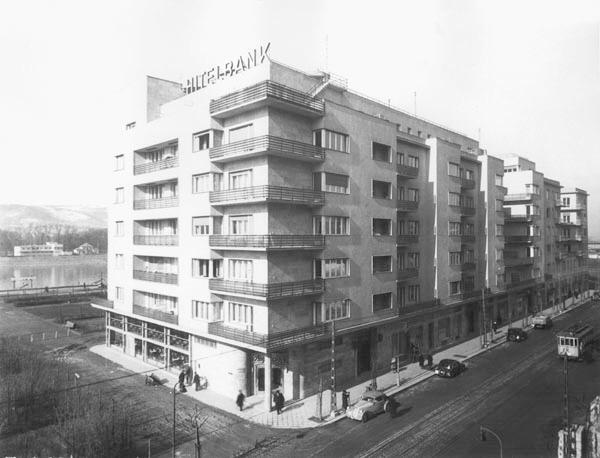
As a result of the self-organising movements, the national cultural policy and the aid granted by the owners of large factories, the cultural and social life of the Angyalföld workers was colourful in the first half of the 20th century. Workers organized book-reading circles, libraries, sports and touring clubs, chores, amateur dramatic groups in their workplace and schools, in religious and even political communities, too. Újlipótváros became part of our district only in 1950. It was built in in the same decades as Angyalföld. In the result of conscious town-planning, tenements built in Bauhaus style replaced the previous landscape: the wood-yards, building-yards, warehouses and the factories disappeared. These smart and modern buildings are generally designed for the middle classes, where freelance intellectuals, doctors, engineers, journalists live in flats furnished with every modern convenience.

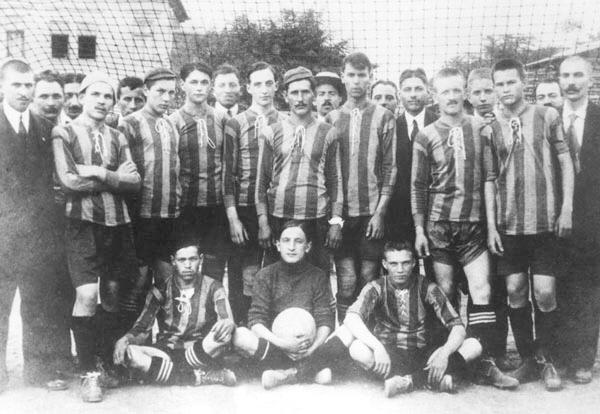
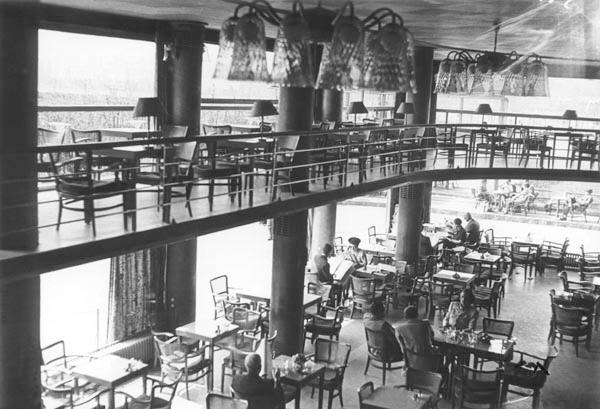
The first team of Vasas SC at the championship of year 1912–13The Margaret Island was also connected to the district in 1950. In the 1800s the Island was the property of József nádor, who turned the weedy and wild landscape of the Island into a real paradise since he built his summer cottage on the ruins of the Franciscan church, built Margitfürdő and Nagyszálló (Grand Hotel). In 1908 the Island was declared public property and open garden. On the sum received for the Island the capital built the Palatinus Houses on the bank of the Danube. These houses are parts of the World Heritage. Between the two World Wars, a lot of new buildings and facilities were built and established on the Island, e. g. the National Sports Swimming Pool, the Palatinus pools, the Open Air Theatre and the Music Well. 
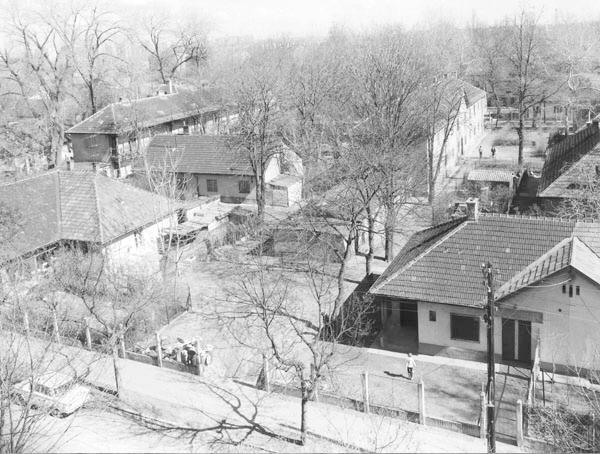
During World War II and especially in winter 1944–45, when Budapest was besieged, bombings and street fights caused considerable damages to the houses, factory buildings; the bridges were destroyed, as well as the buildings of the Margaret Island and the Vígszínház. The population of our district decreased from 90 000 to 54 000 capita.

Angyalföld was one of the first territories of Budapest where the rubble clearance and the removal of ruins began. In the beginning of February 1945, the first tram was put in operation. The workers appeared in their workplaces in the very first days, therefore industrial production could soon be started in Láng Gépgyár and the shipyard, then step by step in other factories.

In the first local elections, the workers’ parties nominated their candidates in a single list and their ally, the National Peasants’ Party won 64% of the votes, thus well exceeding not only the national average proportion of votes but the average of the capital, too. Though the Smallholders’ Party won 57% of the votes in his country list, it could not gain the masses.

On January 1, 1950, a new Act on the reorganisation of public administration came into force. In accordance with the provisions of this Act, the number of the districts of the capital increased from 14 to 22 and the territory of our district enlarged following the connection of Újlipótváros (where middle classes of District 5 lived) and the Margaret Island to the Quarter of workers. The number of the inhabitants of District 13 increased from 74500 to 132000 capita, its territory nearly doubled.

The first three-year-plan was started by the government of workers in 1947. The fulfilment of the tasks and goals demanded hard work from common workers. During the implementation of the first three- and five-year-plans, Angyalföld was developing in compliance with the title and reputation ‘Quarter of the workers’; living standards of its inhabitants increased considerably. Until 1950 2180, until 1955 further 4524 new flats were brought into use. In addition, the Dagály (Tide) pools, Tomori market, new schools, kindergartens were built. The building of Attila József Cultural Centre began even before the outbreak of the war and ended in 1949, when the new Centre opened its doors to the public.

Renationalised large-scale factories considered the improvement of cultural institutions and sports facilities used by their own factory workers, of high importance. Several factories maintained cultural clubs, sports clubs and libraries. The once small Vasas Sport Club of the trade union became a large sports club with 21 sections.

The revolution of October 1956 could not expand in Angyalföld. No bloody fighting’s like in other parts of Budapest happened in this territory, except the incidents at the Rákos Stream.

Until the beginning of the 1980s Angyalföld was always regarded as an industrial town where more than a hundred thousand workers worked in more than four hundred factories, plants, industrial sites and workshops.

The North-South underground-line built in the period of 1981-1990 was a large step forwards the modernisation of the capital’s as well as the district’s transport. The reconstruction of several main roads and the modernisation of the Béke–Lehel Road tramway have already been finished.

The targets of the flat-program introduced in the 1970s were to increase the number of rooms, extend the average ground-space and widen the range of amenities. In the result of building new blocks of houses, the number of flats in the district has increased by 17710 between 1945 and 1980, and then by 6566 until 1984. Our district is decorated with nearly 100 statues and monuments, memorial plaques.

Between 1958 and 1988 we havebuilt 9 schools. Among these new schools we must highlight Berzsenyi Dániel Grammar School that moved to Kárpát Street in Autumn 1986, where the students receive teaching on a higher level in four- or six-year-forms. Németh László Grammar School introduced eight-year-forms secondary education in 1989, since then it has become one of the best secondary schools in Budapest.

From the end of the 1980s the inhabitants of our district witnessed great changes. After the privatisation or often the liquidation of the state-owned enterprises lots of industrial buildings or areas remained empty. Nowadays these empty buildings serve modern office-centres, banks, car- and furniture-saloons, shopping and amusement centres. The grey suburban region of the past now is improving and becomes more and more integrated in the business and financial life of Budapest.

The first local elections after the collapse of the one-party-system were held in 1990. The first Municipal Body of 46 representatives was set up on October 25. In accordance with the amended Act on local governments, our Mayor was elected in the second election and directly by the inhabitants of our district. The Gypsy, Greek, Croatian, Polish, German, Armenian, Serb and Slovak Minority Local Governments were set up in 1998, whilst the Ruthenian and Bulgarian ones were set up in 2002.

Our cultural life remains colourful. Cultural Centres maintained by the local government, cinemas, two metropolitan theatres, a museum and a gallery are open to the public and offer cultural programs for every age groups. In addition, different civil associations also organise several public and cultural events. For the elderly people the local government maintains eight Social Welfare Centres and Clubs where they are offered cheap catering, regular medical counselling and interesting cultural programs.

Regarding international relations of our local government, cooperation with sister towns is of high priority. The first Sister Town Agreement was concluded in 1989 with District 21 of Wien called Florisdorf, then with District Ochota of Warsaw in 1993, with town Szováta (Sovata, Romania) in 1998, with Eszék (Osijek, Croatia) in April 2001 and with Kassa-Délváros (South City of Kosice) in May 2002.